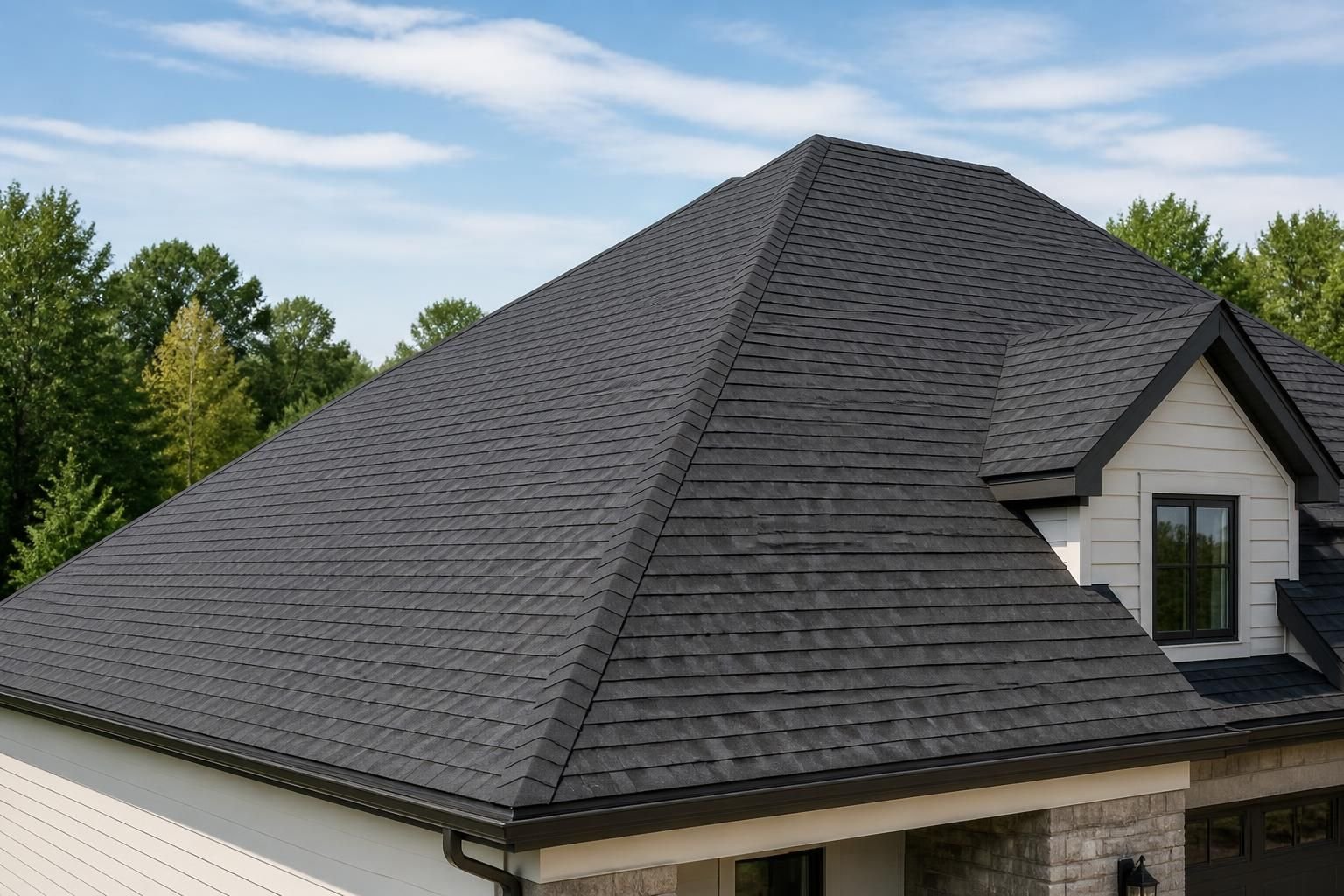
It starts with a few icicles. Then comes a thick ridge of ice along the edge of the roof. Soon water is leaking into your ceiling, and the weather is freezing outside. That ridge of ice is called an ice dam. It is a common winter problem in northern Utah, and it is usually preventable.
How an Ice Dam Forms
An ice dam is not caused by the cold outside. It is caused by heat leaking from inside your home. Here is the chain of events:
- Warm air from your living space leaks into the attic.
- The upper part of the roof gets warm and melts the snow on top of it.
- Meltwater runs down toward the eaves, which are colder because they hang past the warm walls.
- The water refreezes at the edge and builds a wall of ice.
- More meltwater backs up behind the ice and seeps under the shingles.
Shingles are made to shed water that flows downward. They are not made to hold back a pool of water that sits against them. Once water gets under, it can reach the roof deck, the insulation, and your ceiling.
What Damage Do They Cause?
- Water stains and sagging on ceilings and walls.
- Wet, ruined insulation, which then works less well and makes the problem worse.
- Mold and mildew in the attic.
- Rotted wood at the roof edge.
- Torn gutters from the weight of the ice.
- Peeling paint and damaged siding.
Do Not Chip the Ice
It is tempting to grab a hammer or an axe. Please do not. You can easily damage shingles, and falling ice can hurt someone. Climbing on an icy roof is dangerous.
If you have an active leak, a pro can use low pressure steam to remove ice safely. Another short term trick is to place a fabric tube of calcium chloride ice melt across the dam, so it melts a channel for water to drain. Avoid rock salt, which can damage roofing and landscaping. These are quick fixes only. They do not solve the cause.
The Real Fix: Heat, Air, and Insulation
To stop ice dams for good, you need to keep the roof surface cold and even. That means three jobs working together.
- Seal air leaks. Warm air escapes through gaps around recessed lights, attic hatches, vent pipes, chimneys, and wiring holes. Sealing these is often the most useful step.
- Add insulation. More insulation on the attic floor keeps house heat from reaching the roof. Make sure it does not block the vents at the eaves.
- Improve ventilation. A good flow of cold air under the roof deck carries heat away. Soffit vents let air in and ridge vents let it out.
Order matters. Sealing air leaks first makes insulation work better. Adding ventilation alone, without sealing leaks, may not be enough.
Extra Protection at the Roof Edge
When we replace a roof, we can add a waterproof membrane under the shingles along the eaves and in valleys. It is often called ice and water barrier. It is a sticky layer that seals around nails and blocks water that backs up. It does not stop ice dams from forming, but it can stop the water from reaching your home.
It is an inexpensive upgrade at the time of a re-roof. Adding it later means tearing off shingles.
Roof Rakes and Heat Cables
Removing snow from the first few feet of the roof with a roof rake, from the ground, can reduce the water that feeds ice dams. Heat cables can also keep a channel open at the edge. Both can help, but they treat the symptom. They work best alongside better insulation and sealing.
Check Your Insulation Yourself
You can learn a lot from a quick look. On a snowy day, step outside and look at your roof. If one part of the roof is bare while the rest is covered, heat is escaping there. That spot is often above a leaky area in the attic. Inside, look for insulation that is thin, matted, or uneven. Bare patches near the walls and eaves are a common weak point.
When to Call a Pro
Call us if you have had leaks during winter, if your icicles are large and the same spots freeze every year, or if you notice stains on the ceiling near exterior walls. We can check the roof, the attic, and the insulation and explain what will fix it.
Ogden Elite Roofing is happy to look at your roof this fall, before the next freeze. Contact us to schedule an inspection.